
Common Pickleball Injuries and Safe Playing Strategies for All Ages

Updated: Mar 17

Pickleball has become one of the fastest-growing sports in America, and rightfully so—it's accessible, fun, and genuinely social. But here's what I've observed over the past several years: as more people discover the sport, pickleball injuries have become increasingly common. That growth curve tells an important story, and it's one every player needs to understand.
The reality is straightforward. Pickleball injuries typically happen through the same mechanisms: falls, rapid directional changes, and accumulated stress on joints and soft tissues. What's changed isn't the sport itself—it's the volume of players and their training intensity. Most players jumping into pickleball don't realize they need transition time, proper conditioning, or injury prevention strategies.
This guide covers the injuries that appear most frequently, explains why the injury rate has climbed so dramatically, breaks down the statistics by age group, and provides practical strategies so you can enjoy pickleball safely regardless of your age or fitness level.
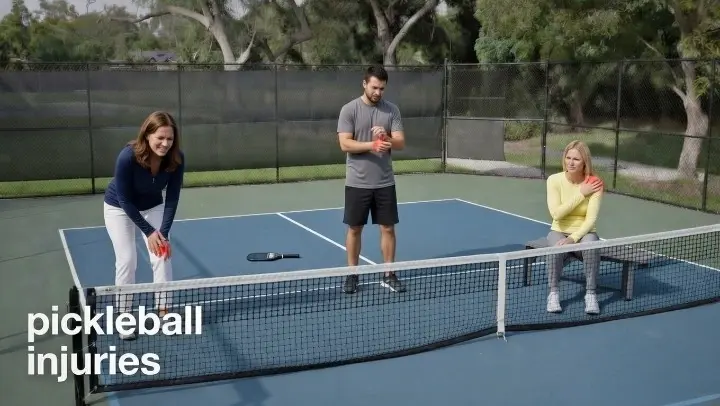
Why Pickleball Injuries Are on the Rise
The numbers tell a compelling story about what's happening in the sport. Between 2020 and 2022, emergency department visits for pickleball injuries nearly doubled—a 91% increase—rising from approximately 8,900 to nearly 17,000 cases annually, according to A Substantial Increase in Injuries and Hospitalizations Associated With Playing Pickleball From 2020 to 2022. More alarming, hospital admissions jumped 257% during that same period. This isn't coincidence; it's a direct reflection of explosive participation growth.
The research shows something important: according to The Epidemiology of Pickleball Injuries Presenting to US Emergency Departments, approximately 73% of these injuries occurred in players aged 60 to 79, though younger players are increasingly represented in recent data. Studies consistently identify the same culprits behind injury growth: increased frequency without adequate rest, court surface conditions causing slips and falls, weakened stabilizer muscles from sedentary lifestyles, and the widespread habit of skipping warm-up routines.
What's fascinating is that the injury rate accelerates disproportionately to participation growth, suggesting that the incoming players—many switching from tennis or starting a new sport—aren't receiving proper conditioning guidance before play. They underestimate the physical demands even though pickleball appears less strenuous than tennis or other court sports. According to CDC Physical Activity Guidelines, proper conditioning and gradual progression are essential for preventing sport-related injuries across all age groups.
Common Pickleball Injuries by Location

Lower Body: The Most Vulnerable Zone
Lower body injuries represent the largest injury category in pickleball. According to the Evaluation of Pickleball-Related Injuries at a Single Institution From 2017 to 2022, pickleball injuries have increased approximately 6.8-fold from 2017 to 2022, with the overwhelming majority occurring below the waist.
The most common lower-body injuries I see include:
Ankle injuries from lateral movements are probably the most frequent complaint. Players shift side-to-side aggressively, and if their stabilizer muscles aren't prepared or court conditions are poor, ankle sprains happen quickly. These range from mild stretches to serious sprains requiring weeks of recovery.
Knee pain after pickleball is increasingly common, especially among older players. This typically manifests as chronic knee pain rather than acute trauma—it's arthritis exacerbation or patellar tracking issues aggravated by repeated pivoting. Some players develop this gradually; others experience acute knee injuries during rapid direction changes.
Achilles tendon problems emerge frequently among players increasing their court time too rapidly. The tendon gets overloaded faster than the body can adapt.
Calf and hamstring pulls happen when players reach for difficult balls without proper muscle preparation. The explosive movements required in pickleball surprise muscles that haven't been properly conditioned.
Serious fall-related injuries occur when players overextend reaching for balls, landing on outstretched hands or twisting awkwardly on impact.
Upper Body: Repetitive Stress Injuries
Upper body injuries usually develop from either repetitive motion (serving, overhead shots) or direct trauma during falls.
Pickleball elbow represents a classic overuse injury. The repetitive swinging motion, combined with improper paddle grip or gripping too tightly, creates inflammation that can persist for months without proper rest and technique adjustment.
Shoulder injuries from serving and aggressive overhead shots are increasingly common. I've observed that players often increase serving intensity before their rotator cuff muscles have adapted to the demands. The shoulder joint is inherently unstable compared to other joints—it trades stability for mobility—and pickleball's overhead movements stress this compromise significantly.
Wrist pain frequently develops from two mechanisms: landing on an outstretched hand during a fall, or cumulative stress from improper paddle mechanics where players absorb ball impact with wrist movement rather than core stability.
These upper body injuries often compound because players compensate awkwardly, creating secondary injuries in other joints.
Eye Injuries: The Rising Threat
This is where data tells a genuinely important story. According to Ocular Pickleball Injuries Rise Sharply With Increasing Game Popularity, pickleball eye injuries are growing at an alarming rate—an estimated 1,262 ocular injuries occurred in 2024 alone, representing a steady climb of approximately 405 cases annually from 2021 forward. This trajectory is significant and often overlooked.
The mechanics are simple: a ball traveling at speed catches a player off-guard before reaction time can kick in. The risk increases during doubles matches where court coverage creates blind spots, and older players face greater risk because reaction time naturally slows with age.
Yet this is the most preventable category of injury. If you're new to Playing Pickleball, understanding the importance of eye protection early can significantly reduce your injury risk. Protective eyewear designed for court sports makes a dramatic difference. Many experts now recommend protective glasses for pickleball, particularly for players over 55 and anyone playing doubles regularly.
Pickleball Injuries and Age: What the Data Really Shows
Older Adults and Pickleball Injury Risk

The question I hear constantly: "Are older people at higher risk playing pickleball?" The answer is nuanced and honest.
Older players face genuine physiological challenges. Balance typically declines with age. Bone density decreases, meaning falls that younger players walk away from can cause fractures in older players. Reaction time naturally slows. Muscle recovery takes longer. These are facts, not judgment—they're simply how bodies age.
Additionally, many older players are returning to athletic activity after years of sedentary living. Their bodies haven't yet adapted to the demands. This transition period carries elevated injury risk.
That said, the CDC and sports medicine research consistently demonstrate that physical activity at any age provides net health benefits that substantially outweigh injury risks—provided players take sensible precautions. The key is starting slowly, progressing gradually, and consulting medical professionals if underlying conditions exist.
Younger Players and Different Injury Patterns

Younger players typically experience fewer fractures and serious injuries, but they're not immune. I see more muscle and joint pain in younger cohorts, often from playing excessive matches in single days without proper recovery. Younger players frequently underestimate the cumulative stress of multiple games.
The pickleball injury statistics by age show that while severe injuries concentrate in older populations, injuries across all age groups are rising proportionally with participation.
Pickleball Injuries vs. Tennis: How Do They Compare?
Players often ask: does pickleball cause more injuries than tennis? The honest answer is: the comparison is more complex than simple numbers suggest.
Pickleball uses a smaller court, slower ball, and lower net—all factors that theoretically reduce injury risk compared to tennis. Court movement distances are smaller. Serves are underhand, creating less shoulder stress than tennis's overhead serves. The ball travels more slowly, giving players more reaction time.
When researchers compare injury rates between sports while controlling for age and activity level, injury numbers are actually comparable. However, because so many new pickleball players are entering the sport without prior conditioning—whereas tennis players typically have established fitness baselines—pickleball injuries on the rise is more pronounced. The newer influx of untrained players skews injury statistics upward.
Additionally, pickleball injuries list tends toward different mechanisms than tennis. Tennis injuries concentrate in shoulders and elbows from serving power. Pickleball injuries concentrate in ankles, knees, and falls because the court movement patterns are different.
Most Common Pickleball Injuries: A Comprehensive Breakdown
Here's the injuries list organized by frequency and severity:
Most prevalent: Ankle injuries and ankle sprains from lateral movement
Most limiting: Knee pain and chronic knee problems
Most stubborn: Shoulder injuries from repetitive serving
Most preventable: Eye injuries through protective equipment
Most overlooked: Foot injuries from inadequate footwear
Most underestimated: Wrist pain from improper shock absorption
Understanding this hierarchy helps players prioritize prevention efforts.
Recovery Timeline: How Long Does It Take?
Recovery from pickleball injuries varies dramatically based on injury severity:
Mild muscle soreness: 1-2 weeks with rest and ice
Tendon pain or inflammation: 4-8 weeks, often requiring modified activity
Significant sprains: 6-12 weeks depending on grade
Fractures or serious injuries: Several months minimum
Chronic conditions: Ongoing management required
The critical mistake is returning to play before genuine healing occurs. Research from the American Academy of Orthopaedic Surgeons clearly shows that premature return to activity converts mild injuries into chronic problems.
How to Recover Properly From Pickleball Injuries
If you develop pickleball-related pain, follow this progression:
Immediate: Rest the injured area completely. Stop playing for at least several days. Ice application reduces inflammation—20 minutes several times daily.
Early recovery: As pain subsides, gentle movement helps maintain range of motion without stressing healing tissue. Physical therapy becomes valuable here.
Progressive return: Only when pain and swelling have genuinely improved, gradually reintroduce activity. Start with modified play—shorter matches, less aggressive movement.
Medical assessment: If pain persists beyond two weeks or significantly limits function, professional evaluation becomes essential. Don't guess with serious injuries.
Is Pickleball Dangerous? The Honest Assessment
Pickleball Injury Prevention: Your Action Plan
Good injury prevention starts before your first serve of the day.
Warm-Up and Stretching Protocol
Light movement for 5-10 minutes before play activates muscles and increases joint lubrication. Dynamic stretching—gentle movements through range of motion—prepares your body better than static stretching. After play, static stretching prevents tightness. These recommendations align with CDC Physical Activity Guidelines, which emphasize the importance of proper preparation before physical activity to minimize injury risk.
Specific attention to ankle mobility, hip flexibility, and shoulder range of motion prevents most common injuries.
Equipment Choices Matter
Court shoes specifically designed for lateral movement prevent most ankle injuries. They provide side support that running shoes simply don't offer.
Cushioned pickleball socks reduce foot fatigue and blister formation. Avoid running shoes on the court—they're designed for forward/back movement, not lateral agility.
Protective eyewear should be normalized, not optional. Make it a habit like buckling a seatbelt.
Smart Playing Habits
Start slowly if you're new to pickleball or returning after time off. Build playing frequency gradually—perhaps 2-3 sessions weekly initially, increasing only after your body adapts.
Take breaks and hydrate regularly. Fatigue causes poor movement mechanics, which directly leads to injury.
Stop playing immediately if pain develops. This isn't weakness; it's wisdom. One session of rest prevents weeks of rehab.
Many people ask "is pickleball hard?" while simultaneously playing multiple matches daily without conditioning. The sport isn't hard—overtraining is hard on your body.
Why People Switch From Tennis to Pickleball
Understanding player migration helps explain injury patterns. Tennis players switch to pickleball because:
The game feels less physically demanding
Matches are shorter and less exhausting
Courts are smaller, requiring less explosive movement
Social aspect is stronger
Lower barrier to entry
Yet many tennis players bring tennis intensity to pickleball without recognizing the different demands. This mismatch creates injury vulnerability during the transition period.
Key Pickleball Facts You Should Know
These statistics matter for understanding risk:
Pickleball-related injuries increased 91% between 2020-2022
Hospital admissions jumped 257% in the same period
Emergency department visits nearly doubled from 8,900 to 17,000 annually
About 73% of injuries occur in players aged 60-79
An estimated 1,262 pickleball eye injuries occurred in 2024
Annual injury estimates grew from approximately 1,300 in 2014 to over 24,000 in 2023
Injury rate has climbed 6.8-fold from 2017 to 2022 in emergency department data
These numbers represent real people with real injuries—preventable in most cases with proper precautions.
Final Thoughts
Pickleball is genuinely an excellent sport for fitness, social connection, and sustained activity across all ages. The injury data isn't meant to discourage participation—it's meant to encourage informed, safe participation.
Most pickleball injuries are preventable. Understanding common mechanisms, respecting the physical demands, preparing your body through warm-up and conditioning, using appropriate equipment, and listening to your body when pain develops—these practices let you enjoy pickleball safely for years.
The goal isn't to avoid pickleball because of injury risk. The goal is to play smart, progress intelligently, and build habits that keep you on the court for decades rather than sidelined by preventable injuries.
Play intentionally. Respect your body's signals. Enjoy the sport safely.


Comments