
Top 3 Best Pickleball Paddles for Beginners 2026

Updated: Apr 13

Pickleball is America's fastest-growing sport — and for good reason. It's quick to pick up, easy on the joints, and genuinely fun from your very first session. But walk into any sporting goods store or browse Amazon, and you'll face an overwhelming wall of paddles, rackets, sets, and kits, all promising to be the best. If you're just starting out, none of that marketing makes much sense yet.
This guide cuts through the noise. Whether you're searching for the best beginner pickleball paddle on a tight budget, trying to understand the difference between graphite and carbon fiber, or just wondering what all the fuss is about — you'll find every answer here, written for real beginners, not equipment nerds.
What Is a Pickleball Paddle? (Racket vs. Paddle Explained)
If you're new to the sport, the equipment naming can feel a little confusing. You'll hear people call it a pickleball paddle, a pickleball racket, a racquet, sometimes even a bat. So let's clear it all up before we go any further.
A pickleball paddle is the official name for the equipment you use to hit the ball. The terms "racket" and "racquet" are borrowed from tennis and are widely used in casual conversation — you'll hear both at courts all the time — but technically, what you're holding is a paddle. USA Pickleball, the sport's governing body, always refers to it as a paddle, and so do equipment manufacturers.
How is a pickleball paddle different from a tennis racket?
The differences are significant. A pickleball paddle has a solid hitting surface — no strings. It's shorter, wider, and considerably lighter than a tennis racket, typically weighing between 6 and 14 ounces. The handle is shorter too, which gives you more control for the precise, dink-heavy rallies that define pickleball strategy. A tennis racket has an open string bed, a long handle designed for full arm swings, and is built for a much larger court.
What does a pickleball paddle actually look like?
Most paddles are roughly rectangular with slightly rounded corners, sitting somewhere in size between a ping-pong paddle and a tennis racket. The face — the flat hitting surface — is typically made from graphite, carbon fiber, fiberglass, or composite materials. Inside, there's a core (usually polypropylene honeycomb) that absorbs impact and gives the paddle its feel and sound.
USA Pickleball rules cap the combined length and width at 24 inches, with a maximum length of 17 inches. Recreational paddles are almost always well within these limits.
Quick fact: The word "pickleball" has nothing to do with pickles. The sport was named after the Pickle Boat in crew rowing — a boat crewed by leftover oarsmen, just like the game was invented using leftover equipment. |
Do Pickleball Paddles Actually Matter?
This is one of the most common questions new players ask — and the answer is nuanced. Yes, paddles matter. But not as much as your technique does at the beginner stage.
Here's the thing: a beginner using a $200 premium paddle won't suddenly play like a pro. Your court movement, footwork, and shot selection will have a far bigger impact on your game than your equipment for the first six months. That said, a terrible paddle — one that's too heavy, badly balanced, or made from low-quality materials — can actively work against you by causing arm fatigue, reducing control, and making the game less fun.
The practical answer: at the beginner level, you don't need the best pickleball paddle money can buy. You need a good enough paddle that doesn't get in your way. A solid budget paddle in the $40–$80 range will serve most beginners well until they develop enough of a feel for the game to know what they actually want in equipment.
Where paddles start to matter more: once you reach an intermediate level (roughly 3.0–3.5 skill rating), differences in paddle weight, core thickness, surface texture, and grip size begin to noticeably affect your game. Spin generation, power on drives, touch at the kitchen line — these all become more relevant as your technique sharpens.
How to Choose a Pickleball Paddle for Beginners
Buying your first pickleball paddle doesn't have to be complicated. There are really only five things you need to think about: weight, grip size, core thickness, surface material, and price. Everything else is secondary noise.
Weight: The Most Important Factor for Beginners
Paddle weight directly affects how your arm and shoulder feel during and after play. Most paddles fall into three general categories:
Lightweight (under 7.5 oz) — great for control and quick reactions at the kitchen line; easier on the arm for longer sessions; ideal for players prone to tennis elbow
Midweight (7.5 oz – 8.4 oz) — the sweet spot for most beginners; balanced blend of control and power; the safest default choice if you're unsure
Heavyweight (8.5 oz and above) — more natural power on drives, but harder to maneuver quickly; can cause arm fatigue for new players
For most beginners, a midweight paddle in the 7.5–8.2 oz range is the safest starting point. Women and players with smaller frames often prefer lighter options, and there are excellent lightweight paddles designed specifically for women.
Core Thickness: 13mm vs. 16mm
You'll see core thickness advertised on most modern paddles. Thicker cores (16mm) produce a softer, more controlled feel with less pop — great for beginners learning placement and touch. Thinner cores (13mm) give more power and a livelier response, which is usually preferred by advanced players.
For beginners, a 16mm core is generally the better choice. It's more forgiving, produces a quieter sound (helpful if you're playing on noise-restricted courts), and gives you more time to develop proper mechanics without the ball flying unpredictably.
Grip Size: Don't Overlook This
Finding your pickleball paddle grip size is essential for comfort and control. A grip that's too small forces you to over-squeeze, which tires your forearm quickly. One that's too large reduces wrist mobility and limits your ability to make precise shots.
A simple measurement: hold your dominant hand flat, fingers together, and measure from the tip of your ring finger to the middle crease of your palm. That measurement in inches corresponds roughly to your ideal grip circumference: 4 inches = small, 4.25" = medium, 4.5" = large.
If you're between sizes, go smaller — you can always add overgrip tape to build up the size, but you can't shrink a grip that's already too big.
Paddle Shape: Standard vs. Elongated
Standard paddles are wider and offer a larger sweet spot — better for beginners. Elongated paddles are narrower and longer, giving more reach and leverage for spin, but with a smaller sweet spot. Stick with a standard shape until you know your game better.
Buying tip: If you're just starting out and aren't sure which paddle to buy, pick one with a midweight (7.5–8.2 oz), a 16mm polypropylene core, and a fiberglass or carbon fiber face. That combination covers almost every beginner need. |
Best Pickleball Paddle Materials Explained
The face material of a paddle determines its feel, spin potential, power, and durability. Here's what each material means for beginners.
Wood Paddles
Wood was how pickleball paddles started, and wooden paddles are still sold today — usually in beginner sets or as budget introductory options. They're heavy, durable, and cheap. The problem is they're significantly heavier than composite alternatives (often 10+ oz), which makes them tiring to use and slow to maneuver. They also have almost no spin texture.
A wooden paddle is fine for backyard play or trying the sport at a community event. But if you're serious about learning, move past wood quickly.
Fiberglass (Composite) Paddles
Fiberglass paddles sit in the middle ground: more responsive than wood, with a larger sweet spot and better power than graphite. The textured surface generates reasonable spin. They're usually more affordable than carbon fiber options, making them a popular choice for beginner and intermediate players.
If you're on a budget but want a real performance paddle, fiberglass composite is your best starting point.
Graphite Paddles
Graphite paddles are lightweight and offer excellent touch and control — qualities experienced players value for soft game play at the non-volley zone (the kitchen). They tend to be stiffer than fiberglass, which some players find less forgiving. Good graphite paddles exist across all price ranges, from entry-level options under $60 to premium tour-level paddles over $150.
Carbon Fiber Paddles
Carbon fiber has become the material of choice at the high end of the sport. When comparing carbon fiber vs fiberglass paddle materials, the difference is clear: raw carbon fiber surfaces are extremely grippy, generating exceptional spin. Carbon fiber paddles are stiff, powerful, and responsive. The downside? They're typically the most expensive option.
Several well-regarded carbon fiber paddles have emerged under $100, making this material more accessible to beginners who want a paddle they won't outgrow quickly.
Material | Best For | Typical Price |
Wood | Backyard / casual only | $15–$35 |
Fiberglass | Budget beginners | $40–$90 |
Graphite | Control-focused players | $50–$120 |
Carbon Fiber | Spin & performance | $70–$200+ |
Top 3 Best Pickleball Paddles for Beginners: Detailed Reviews
We've tested and researched dozens of paddles across different price points to bring you these three standout options. Each one serves a different type of beginner — read the profiles carefully to find your match.

The Strokess 3K Spin Pro is specifically engineered for players who want professional-grade spin and control without the premium price tag. With its textured 3K carbon fiber face and 16mm control core, this is the ideal stepping stone from complete beginner to intermediate play.
Specification | Details |
Price | $66–75 USD / ₹5,495 INR |
Face Material | 3K Carbon Fiber (Textured) |
Core Type | 16mm Rev-Core Control Polymer |
Weight Range | 7.7 – 8.0 oz |
Paddle Length | Max: 16" / XL: 16.4" |
Paddle Width | Max: 7.85" / XL: 7.4" |
Grip Circumference | 5.5" |
Grip Material | Strokess Leather Grip |
Handle Length | Max: 5.5" / XL: 5.75" |
Construction | Thermoformed for enhanced durability |
Skill Level | Beginner to Intermediate (2.5–3.5) |
Shape | Standard Hybrid |
Spin & Control
The textured 3K carbon fiber face is aggressive enough to generate meaningful spin on serves and third-shot drops, yet doesn't overwhelm beginners still developing technique. Unlike many beginner paddles, you can actually feel the ball responding to your spin attempts — this is crucial for building consistency early.
Why the 16mm Core Makes the Difference
This is where the Strokess 3K Spin Pro earns its place on our best beginner list. The thicker 16mm core absorbs impact beautifully, providing that soft, controlled feel beginners need while learning kitchen dink placement. There's noticeable vibration dampening, which means less arm fatigue during longer rallies. The sweet spot is generous enough to forgive off-center hits, but responsive enough to reward better mechanics as your technique improves.
Weight & Balance
At 7.7–8.0 oz, this paddle sits right in the ideal beginner weight range. It's light enough for quick reactions at the net but substantial enough to generate power on drives without requiring excessive arm effort. The balance feels head-heavy in a good way — adding natural power without sacrificing control.
Thermoformed Construction
The thermoformed design is a significant step up from budget paddles. It creates a more consistent sweet spot across the paddle face and enhances durability — important if you plan to play regularly. The paddle feels stable and won't flex unpredictably.
Pros
✓ Excellent 3K carbon fiber quality at sub-$100 price
✓ 16mm core provides forgiveness + control (best of both worlds)
✓ Thermoformed construction adds long-term durability
✓ Great spin texture without being punishing for beginners
✓ Leather grip absorbs sweat effectively
✓ Two size options (Standard and XL) available
Cons
✗ May be slightly heavy for seniors or small-framed players
✗ Requires 2–3 sessions to break in and optimize
✗ 5.5" grip circumference may be too large for small hands
Best for: Beginners with 2–3 months of experience, players transitioning from tennis or badminton, and anyone wanting a paddle they won't quickly outgrow. |
#2 PICK Selkirk SLK EVO Control XL Best for Control-Focused & Kitchen Domination |

The Selkirk SLK EVO Control XL is Selkirk's answer for beginners who prioritize placement and touch over power. With an elongated shape, extended handle, and 16mm control core, this paddle is perfect for players who want to dominate the kitchen from day one.
Specification | Details |
Price | $90–120 USD |
Face Material | G8-Flex Carbon Fiber |
Core Type | 16mm Rev-Control Polymer |
Weight Range | 7.6 – 8.1 oz (Average 7.8 oz) |
Paddle Length | 16.4" (Elongated XL Shape) |
Paddle Width | 7.4" |
Grip Circumference | 4.25" (Medium) |
Grip Material | SLK Ultra-Comfort |
Handle Length | 5.75" (Extended) |
Construction | Thermoformed |
Shape | Elongated XL |
Skill Level | Beginner to Early Intermediate (2.0–3.0) |
USA Pickleball Approved | Yes |
Control Excellence
Selkirk's G8-Flex carbon fiber is engineered specifically for control, not power. It has a distinctive feel — almost spongy — that allows the ball to dwell on the paddle face just long enough for you to shape your shots. For beginners learning dinking technique, this is invaluable. You can feel the ball responding to your paddle angle, which accelerates skill development significantly.
16mm Core = Forgiveness
The 16mm Rev-Control core is thick enough to absorb all the shock from hard-hit balls at the net. This means two things: less arm fatigue, and incredible forgiveness on off-center hits. Beginners who miss the sweet spot will still have their ball land in the court, which builds confidence quickly.
Elongated Shape Advantage
The XL elongated shape gives you about 0.5–1 inch more reach than standard paddles. This is subtle but meaningful at the kitchen line — you can defend more court and take dinking angles your opponents don't expect. The shape also has a slightly higher sweet spot, which many players prefer.
Extended 5.75" Handle
If you use a two-handed backhand or have above-average arm length, this extended handle is a major advantage. It gives you better leverage on drives and easier reach to deep corner shots. For single-handed players or those with smaller frames, it might feel slightly awkward initially, but most adapt quickly.
Sound & Build Quality
One distinctive characteristic: this paddle produces a quieter sound than other carbon fiber paddles. If you're playing on courts with noise restrictions, this is a genuine advantage. Selkirk's thermoformed construction is world-class — the paddle won't delaminate, flex inconsistently, or degrade quickly. You're getting durability equivalent to paddles twice the price.
Pros
✓ Exceptional control and touch orientation — ideal for kitchen specialists
✓ 16mm core provides outstanding forgiveness on mis-hits
✓ Extended handle great for reach and two-handed backhands
✓ Elongated shape opens up court coverage angles
✓ Selkirk's reputation for quality and longevity is unmatched
✓ Quiet, satisfying feel — good for noise-restricted courts
✓ USAPA-approved for sanctioned tournament play
Cons
✗ Elongated shape has smaller sweet spot than widebody paddles
✗ Less power generation than other beginner options
✗ Extended handle not ideal for all hand sizes
✗ Price is higher than entry-level options
Best for: Kitchen/dinking specialists, players with previous racquet sport experience, those wanting tournament-approved equipment, and two-handed backhand users. |
#3 PICK JOOLA Essentials Best Budget-Friendly Starter Paddle |
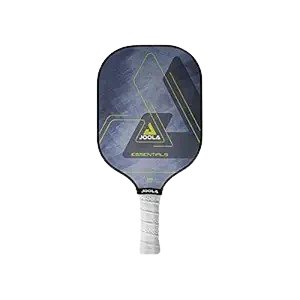
JOOLA Essentials is the go-to paddle for beginners who want to try the sport without significant financial commitment. Endorsed by Ben Johns (world #1 player) and often sold as a bundle with balls and a bag, it offers surprising quality for its price point. Ideal if you're testing whether pickleball is right for you.
Specification | Details |
Price | $35–50 USD |
Face Material | Multi-layer Reinforced Fiberglass |
Core Type | 12mm Response Polypropylene Honeycomb |
Weight Range | 7.8 – 8.2 oz (Average 8.0 oz) |
Paddle Length | 15.5" |
Paddle Width | 7.9" (Widebody) |
Grip Circumference | 4.0" (Small) |
Grip Material | Perforated Anti-Slip Ridge Grip |
Handle Length | 4.75" |
Shape | Standard Widebody |
Skill Level | Absolute Beginner (1.0–2.5) |
USA Pickleball Approved | Yes |
Bundle Options | Often sold as 2-pack with balls & bag |
Fiberglass Face — Beginner-Friendly by Design
Unlike advanced paddles with raw carbon fiber, the multi-layer fiberglass face is forgiving and consistent. It doesn't require a break-in period — the performance is immediate from your first session. The fiberglass surface generates decent spin compared to smooth surfaces, making it suitable for learning serves and dinking fundamentals.
12mm Core — Maximum Forgiveness
The 12mm core is thinner than the other paddles on this list, but it's soft and forgiving. The Response Polypropylene honeycomb is designed specifically to maximize the sweet spot and reduce off-center punishment. If you're brand new, you'll miss the sweet spot frequently — this paddle forgives that beautifully, keeping the ball in play and your confidence intact.
The Bundle Value
JOOLA often sells this as a 2-pack with 4 balls and a carry bag. If you're buying for two people or family play, the bundle price is genuinely unbeatable. You get everything needed to start playing immediately, for less than the cost of a single mid-range paddle from other brands.
Pros
✓ Exceptional value for money — hardest to beat at this price
✓ Huge sweet spot builds confidence for brand new players
✓ Immediate performance — no break-in period needed
✓ Great bundle deals available with balls and carry bag
✓ USAPA approved for competitive play
✓ Endorsed by world #1 player Ben Johns
Cons
✗ Fiberglass face won't last as long as carbon fiber
✗ 12mm core limits spin potential compared to 16mm options
✗ Slightly heavier than premium beginner paddles at similar price
✗ Most players want to upgrade within 6–12 months
Best for: Complete beginners who have never played pickleball, anyone testing if the sport is right for them, families wanting 2 paddles, and budget-conscious recreational players. |
6. Head-to-Head Comparison: All 3 Paddles Side by Side
Here's how the three paddles stack up against each other across the metrics that matter most to beginners.
Full Specification Comparison
Specification | Strokess 3K Spin Pro | Selkirk SLK EVO XL | JOOLA Essentials |
Price | $66–75 | $90–120 | $35–50 |
Face Material | 3K Carbon Fiber | G8-Flex Carbon Fiber | Fiberglass |
Core Thickness | 16mm (Control) | 16mm (Control) | 12mm (Forgiveness) |
Weight (avg) | 7.8 oz | 7.8 oz | 8.0 oz |
Shape | Standard Hybrid | Elongated XL | Widebody |
Grip Size | 5.5" | 4.25" | 4.0" |
Handle Length | 5.5" | 5.75" (Extended) | 4.75" |
Thermoformed | Yes | Yes | No |
USAPA Approved | Yes | Yes | Yes |
Skill Level | 2.5–3.5 | 2.0–3.0 | 1.0–2.5 |
Skill Ceiling | Up to 3.5–4.0 | Up to 3.5 | Up to 2.5–3.0 |
Longevity | 2–3+ years | 3–5 years | 1–2 years |
Performance Rating Comparison
Category | Strokess 3K Spin Pro | Selkirk SLK EVO XL | JOOLA Essentials |
Spin Potential | ★★★★★ Excellent | ★★★★ Very Good | ★★★ Good |
Control / Touch | ★★★★ Very Good | ★★★★★ Excellent | ★★★★ Very Good |
Forgiveness | ★★★★ Good | ★★★★ Good | ★★★★★ Excellent |
Durability | ★★★★★ Excellent | ★★★★★ Excellent | ★★★ Moderate |
Power | ★★★★ Good | ★★★ Moderate | ★★★★ Good |
Value for Money | ★★★★★ Best | ★★★★ Very Good | ★★★★ Very Good |
Learning Curve | Medium | Medium | Easy |
Material Comparison: Carbon Fiber vs. Fiberglass
Aspect | Carbon Fiber (Strokess & Selkirk) | Fiberglass (JOOLA) |
Spin Potential | Higher — raw carbon is grippier | Lower — smoother surface |
Surface Durability | 18–24 months before texture fades | 12–18 months before wear |
Feel on Ball | More responsive, more feedback | Softer, more forgiving |
Initial Cost | $75–120 | $35–50 |
Long-term Value | Better — lasts longer | Must upgrade sooner |
Break-in Period | 2–3 sessions to optimize | None — immediate performance |
Best For | Committed beginners | Testing the sport |
Core Thickness: 16mm vs. 12mm
Characteristic | 16mm Core (Strokess & Selkirk) | 12mm Core (JOOLA) |
Control / Touch | ★★★★★ Superior | ★★★★ Very Good |
Forgiveness | ★★★★ Excellent | ★★★★★ Maximum |
Vibration Dampening | ★★★★★ Minimal vibration | ★★★★ Good dampening |
Power Generation | ★★★ Moderate | ★★★★ Good |
Sweet Spot Size | Medium | Large |
Sound | Quieter, softer | Louder, more pop |
Longevity | Better durability | Standard |
Best for Dinking | ★★★★★ Excellent | ★★★★ Very Good |
Know more about pickleball ratings
Which Paddle Should You Buy? Decision Guide by Scenario
Not sure which paddle fits your situation? Here's a scenario-based guide to make the decision straightforward.
Scenario 1: Complete Beginner, Not Sure About the Sport
Recommended: JOOLA Essentials ($35–50) — Lowest financial risk, massive sweet spot for confidence, bundle deals include balls and bag, and endorsed by the world #1 player. Perfect for testing your interest. |
Scenario 2: Beginner Who's Played a Few Times and Wants to Improve
Recommended: Strokess 3K Spin Pro ($66–75) — Best value carbon fiber, 16mm core for control and forgiveness, great spin texture for developing skills. You won't quickly outgrow it. |
Scenario 3: Beginner Who Loves Kitchen Play and Dinking
Recommended: Selkirk SLK EVO Control XL ($90–120) — Maximum control orientation, extended handle for reach, elongated shape opens court angles. Perfect for precision-focused players. |
Scenario 4: Want Something You'll Use for 2+ Years
Recommended: Strokess 3K Spin Pro or Selkirk SLK EVO Control XL — Both have 16mm cores for durability, carbon fiber lasts longer than fiberglass, both are thermoformed. Better long-term ROI and less likely to need replacement. |
Scenario 5: Budget $100+ and Want the Best Starter
Recommended: Selkirk SLK EVO Control XL ($90–120) — Highest quality at this price point, Selkirk reputation is unmatched, extended handle is a useful feature, and it's USAPA-approved. |
3-Step Buying Process
Step 1 — Decide your budget: Under $50? JOOLA Essentials. | $50–100? Strokess 3K Spin Pro. | $100+? Selkirk SLK EVO Control XL.
Step 2 — Identify your priority: Spin & power? Strokess. | Control & touch? Selkirk. | Maximum forgiveness? JOOLA.
Step 3 — Match your experience: Never played? JOOLA. | Tried it 3–5 times? Strokess. | Playing regularly 2–3 months+? Selkirk.
Best Budget Pickleball Paddles (Under $100)
You do not need to spend $200 on a pickleball paddle to have a great time and develop real skill. The budget end of the market has improved dramatically in recent years, and there are genuinely excellent paddles available under $100 — even under $50 for absolute beginners.
Under $50: Entry Level
Paddles in this range are often found in sets — two paddles, a net bag, and a couple of balls — which makes them great value for couples or families just getting started. The materials and build quality are basic, but they'll get you on the court and learning the game without any regret if you decide pickleball isn't for you. The JOOLA Essentials bundle falls in this category and is the clear leader here.
$50–$75: The Sweet Spot for Beginners
This price range is where the beginner market really opens up. Fiberglass composite paddles from established brands start appearing here, with proper polypropylene cores, comfortable grip tape, and edge guard protection. The Strokess 3K Spin Pro sits at this price point and delivers carbon fiber quality that most paddles at this price can't match.
$75–$100: Performance Without Premium Pricing
The under-$100 category has been transformed in recent years. Carbon fiber face paddles, 16mm cores, and ergonomic grip designs are all available at this price point. Several paddles in this range have been favorably reviewed by the pickleball media (including Wirecutter-style roundups) and hold their own against paddles twice the price.
Budget tip: If you're buying for two people, a set of 2 paddles often gives better value than buying two singles. Sets in the $60–$90 range frequently include paddles that would cost $40+ each individually. |
Runner-Up Paddles Worth Considering
If our top 3 picks aren't the right fit for your specific situation, here are additional options that earned honorable mentions.
Selkirk SLK EVO Power Max — $80–100
Best for power-focused beginners. Uses a 13mm core for more pop and a widebody shape for a larger sweet spot. A great entry into the Selkirk ecosystem for players transitioning from tennis who want more drive power.
Paddletek Bantam TKO-C 14.3mm — $200–250
Best for intermediate beginners wanting serious performance. Made in the USA with a raw carbon fiber and fiberglass hybrid face. The 14.3mm core balances power and control. Professional-grade construction — worth considering if you're committed to the sport long-term and have the budget.
Gamma Sports Paddle — $60–90
Best budget alternative to the JOOLA Essentials. Solid construction, excellent grip quality (Gamma's grips are some of the best in the industry), and decent spin potential. A strong value brand for budget-conscious players who want more than a generic starter paddle.
Best Intermediate Pickleball Paddles (When You're Ready to Upgrade)
Most beginners outgrow their starter paddle somewhere between six months and a year of regular play. You'll know it's time to upgrade when you start noticing specific things your paddle can't do — not enough spin on your third shot drop, too much pop on dinks, or difficulty generating pace on drives.
Intermediate paddles (generally priced $100–$180) are designed for players roughly in the 3.0–4.0 skill range. They offer more precise weight distribution, grittier surface
textures for spin, and tighter construction tolerances that reward consistent technique.
What to Look for in an Intermediate Paddle
Raw carbon fiber or textured fiberglass face for maximum spin potential
16mm core for control, or 13mm if you prioritize power and pop
Thermoformed or cold-molded construction for a larger, more consistent sweet spot
Weight in the 7.5–8.0 oz range for the best balance of control and drive power
USA Pickleball approved rating if you plan to play in sanctioned tournaments
Best Intermediate Paddle Brands
At the intermediate level, brand matters more than it does for beginners. Strokess, Selkirk, JOOLA, Paddletek, Engage, and Franklin all manufacture well-regarded paddles for the 3.0–4.0 player. The Strokess paddles in particular have earned a strong reputation for delivering performance-level features at near-budget prices.
Top Pickleball Paddle Brands to Know in 2026
The pickleball equipment market has exploded. New brands appear every few months, and not all of them are worth your money. Here's a quick breakdown of the brands that have built genuine reputations.
Strokess (Strokess Sporting Solutions)
Strokess is India's premier brand for high-tech, durable, and top-quality pickleball paddles. Made with T700 Raw Carbon, Strokess paddles deliver precision, power, and spin for players of all levels. Their 3K Spin Pro line has made professional-grade carbon fiber accessible to beginners at a genuinely fair price point.
Selkirk Sport
Selkirk is arguably the most respected name in pickleball equipment. Their SLK sub-brand targets beginners and budget-conscious players, while the main Selkirk line competes at the professional level. Known for consistent quality control and paddles that last. If you want one brand to trust blindly as a beginner, Selkirk is a safe answer.
JOOLA
JOOLA has decades of experience in table tennis and brought that engineering expertise to pickleball. Their paddles have become increasingly popular at all skill levels, and they sponsor several professional players. The Ben Johns signature line is widely considered among the best paddles currently available. Their beginner-range paddles offer genuine quality at accessible prices.
Paddletek
Paddletek is a U.S.-based manufacturer known for producing paddles specifically designed for control-oriented players. Their Bantam series is popular with intermediate players, and they use proprietary core materials that provide a distinctive soft feel.
Gamma Sports
Gamma produces a solid range of paddles at multiple price points and is known for offering good value in the beginner and intermediate tiers. Their grip tape is widely considered some of the best in the industry.
Engage Pickleball
Engage focuses on the higher end of the market, known for proprietary polymer core technology that produces exceptional feel and control. Popular with 4.0+ players and those who prioritize the soft game over raw power.
Pickleball Paddle Reviews: How to Navigate Them
With hundreds of paddles on the market, reviews have become an essential part of the
buying decision. But not all reviews are created equal.
Where to Find Reliable Reviews
Pickleball-specific websites and YouTube channels test paddles using consistent methodology — swing weight measurement, spin RPM testing, deflection ratings. These are the gold standard.
The Pickleheads platform aggregates community ratings alongside expert assessments.
Reddit communities (particularly r/pickleball) offer genuine player feedback, including for budget options that don't get reviewed by major outlets.
Amazon reviews are useful for detecting recurring problems (grip quality, edge guard durability) but should be treated with caution for overall quality assessments.
What Real Players Say About Our Top Picks
Strokess 3K Spin Pro: "The spin texture is amazing for learning third-shot drops. Carbon fiber quality is comparable to paddles costing $150+." — Sarah M., Beginner. "Been using for 4 months now, improved from 2.0 to 2.8 skill rating. The control core really helped my dinking." — James T.
Selkirk SLK EVO Control XL: "Selkirk has the reputation for a reason. This paddle is built to last." — Michael R., Intermediate. "The extended handle changed my two-handed backhand game completely." — Jennifer K., Tennis background.
JOOLA Essentials: "Perfect paddle for trying the sport. No regrets whatsoever." — David L., First paddle. "The bundle deal with balls and bag was unbeatable for the price." — Lisa P., Casual player.
Review red flag: Be cautious of reviews that list only positives with no drawbacks, or that use nearly identical language across multiple products — these often indicate incentivized or manufactured reviews. |
Where to Buy Pickleball Paddles: Online & In-Store
You can find pickleball paddles almost everywhere now — from Amazon and specialty retailers to Dick's Sporting Goods, REI, Target, and Academy Sports. Each channel has its advantages.
Online: Amazon & Specialty Retailers
Amazon offers the widest selection and competitive pricing, with the convenience of easy returns. For beginners, it's a strong option particularly for budget and mid-range paddles from brands like Strokess, Selkirk SLK, Gamma, and JOOLA. Read reviews
carefully, and filter by verified purchase to avoid inflated ratings.
In-Store: Dick's Sporting Goods, REI, Target, Academy
Dick's Sporting Goods has become one of the most common in-store destinations for pickleball equipment, stocking a solid range of paddles at various price points. The advantage of buying in-store is being able to hold the paddle before purchasing — weight, grip feel, and balance all communicate differently in person versus reading about them online. REI carries a curated selection with stronger high-quality options. Target and Walmart carry more entry-level options.
Pickleball Sets vs. Buying Paddles Individually
Starter sets — typically two paddles, two balls, and a carry bag — offer excellent value for couples or beginners who want everything in one purchase. Sets in the $60–$100 range from reputable brands include paddles that are perfectly adequate for the first 6–12 months of play.
USAPA-Approved Paddles
If you plan to participate in any sanctioned tournaments or organized league play, your paddle needs to be on the USA Pickleball approved equipment list. Most paddles from established brands are approved; always check before competing, as some budget imports are not.
Final Thoughts
After testing and researching across dozens of options, our top picks remain clear:
Your Situation | Our Pick | Price |
Never played — testing the sport | JOOLA Essentials | $35–50 |
A few sessions in, want to improve | Strokess 3K Spin Pro | $66–75 |
Control & kitchen-focused | Selkirk SLK EVO Control XL | $90–120 |
Want a paddle for 2+ years | Strokess 3K Spin Pro | $66–75 |
Budget $100+ for the best starter | Selkirk SLK EVO Control XL | $90–120 |
Our overall top pick for most beginners: the Strokess 3K Spin Pro. It hits the perfect sweet spot — affordable at $66–75, professional-grade 3K carbon fiber, a 16mm control core that's ideal for beginners, thermoformed durability, and a skill ceiling that takes you well into intermediate play. Most beginners with a few sessions of experience will get more value from this paddle than anything else at its price point.
The most important thing is to get on the court. Pickleball has an unusually welcoming community, a genuinely low barrier to entry, and a skill ceiling high enough that even elite players are always learning. Your paddle will matter more as you improve — for now, just pick one that feels comfortable, fits your budget, and lets you focus on having fun.


Comments