
Top 10 Pickleball Game Mistakes Beginners Make (And Expert Fixes to Dominate the Court)

Updated: Mar 18
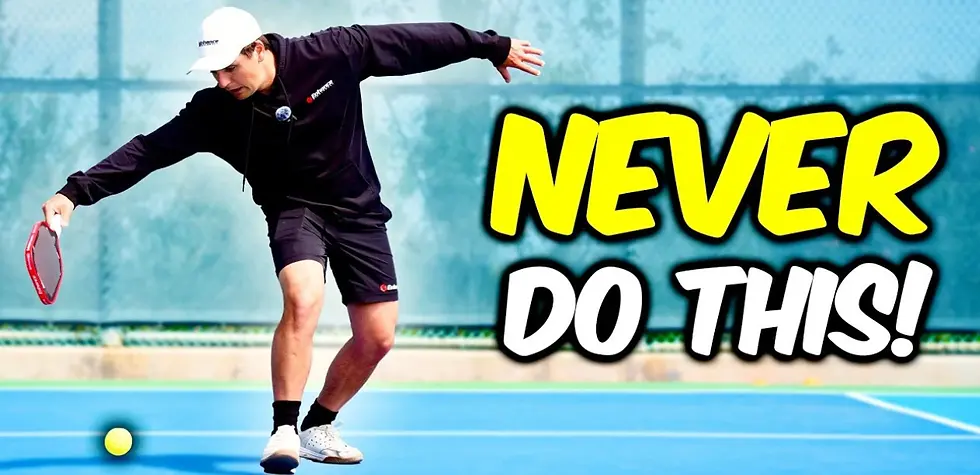
In this blog, we talk about the most common pickleball game mistakes beginners make and provide expert-backed strategies to transform your performance from amateur to advanced player. According to USA Pickleball's official training guidelines and research from the International Pickleball Teaching Professional Association (IPTPA), addressing these fundamental errors can improve your win rate by up to 40% within just a few weeks of focused practice.
Why Beginners Struggle: Understanding the Learning Curve
The small pickleball court, oversized paddle, and wiffle-style ball make it look easy, but the sport requires precise technique, strategic positioning, and mental awareness. The good news? Most beginner mistakes follow predictable patterns. Research from the IPTPA shows that new players who actively correct these errors advance twice as fast as those who simply play more games without focused improvement.
Understanding pickleball rules is the foundation, but avoiding common technical mistakes elevates your performance. Unlike other racquet sports like tennis or badminton, pickleball requires unique positioning strategies and shot selection. Every pickleball game presents opportunities to learn, but understanding these mistakes accelerates your improvement dramatically.
The Top 10 Pickleball Game Mistakes (And How to Fix Them)
Standing Too Close to the Net (Kitchen Line Violations)
The Mistake: Many beginners rush to the non-volley zone (the "kitchen") and either step into it while volleying or position themselves too close, limiting their reaction time. According to USA Pickleball kitchen momentum rules, stepping on or into the seven-foot non-volley zone during or after a volley results in a fault.
The Fix: Maintain a position 2-3 inches behind the kitchen line with knees slightly bent. Practice the "split-step" technique: as your opponent makes contact with the ball, perform a small hop to stay on your toes and ready to move. Elite coach Sarah Ansboury recommends drilling kitchen line awareness by placing tape 6 inches behind the line during practice.
Gripping Your Pickleball Paddle Too Tightly
The Mistake: Beginners often death-grip their pickleball paddles, creating tension in the forearm and wrist that reduces control and causes fatigue. Many beginners transfer habits from other racquet sports, leading to improper grip techniques. While pickleball rackets (also called paddles) come in various weights and materials, proper grip technique remains universal. A study by the Sports Science Institute found that excessive grip pressure decreases shot accuracy by up to 35%.
The Fix: Use a continental grip (like holding a hammer) with a pressure rating of 4 out of 10. Your grip should be firm enough to control the pickleball paddle but relaxed enough to allow wrist flexibility. IPTPA-certified instructors recommend the "shake hands" approach: grip the paddle as if you're giving it a friendly handshake, not strangling it. Investing in quality pickleball equipment matters, but technique trumps gear every time.
Hitting Every Ball Hard (Power Over Placement)
The Mistake: New players often swing for the fences on every shot, resulting in balls sailing out of bounds or floating high enough for opponents to attack. The pickleball game rewards precision over power, especially at the intermediate level.
The Fix: Focus on placement and consistency. Aim for 70% controlled shots to 30% aggressive shots. Professional players like Ben Johns emphasize "building points" rather than trying to end them immediately. Practice hitting to specific zones: deep returns to keep opponents back, low shots to the kitchen to create pop-ups, and only attack balls above net height.
Poor Court Positioning and Movement
The Mistake: Beginners often stay planted in one spot or move inefficiently, leaving large gaps in their pickleball court coverage. They also forget to move up to the kitchen line after the serve or return, giving opponents an advantage.
The Fix: Follow the "two-shot rule": after serving, move up after your opponent hits their return. After returning serve, advance to the kitchen line after your third shot. In doubles, maintain side-by-side positioning with your partner, moving as a unit. Practice lateral shuffling rather than crossing your feet to maintain balance and quick reactions.
Ignoring the Third Shot Drop
The Mistake: The third shot drop is pickleball's most important strategic shot, yet beginners often blast the ball hard instead. This gives opponents an easy attack opportunity from the kitchen line.
The Fix: Master the soft, arcing shot that lands in your opponent's kitchen, forcing them to hit upward. Third shot drop shoulder technique control should peak about 8-10 feet high and land within three feet of the kitchen line. Practice this shot relentlessly; it's the gateway to advanced play and neutralizes your opponents' positioning advantage.
Watching Your Shot Instead of the Opponent
The Mistake: After hitting the ball, beginners often admire their shot instead of immediately preparing for the return. This delays reaction time and leads to being caught off-guard. In any competitive pickleball game, reaction time separates good players from great ones.
The Fix: Develop the "hit and split" habit: immediately after making contact, return to ready position (pickleball paddle up, knees bent) and watch your opponent's paddle. Top players track the ball only until it crosses the net, then shift focus to the opponent's body positioning and paddle angle to anticipate the return shot.
Hitting Balls Below Net Height Aggressively
The Mistake: When forced to hit a low ball, beginners often try to attack it, resulting in errors or easy put-aways for opponents. Low balls should almost never be attacked.
The Fix: Follow the golden rule: if the ball is below net height, hit it softly and high to reset the point. Use a lifting motion to send the ball deep or into the kitchen. Only attack balls that are above the net and within your strike zone. This patience-based approach, endorsed by the IPTPA, helps you avoid unforced errors.
Popping Up Dinks (Weak Kitchen Shots)
The Mistake: During kitchen rallies (dinking), beginners frequently pop the ball too high, giving opponents an easy smash opportunity. This happens due to excessive backswing and improper contact point.
The Fix: Keep your dinks low by using minimal backswing and contacting the ball slightly in front of your body with a gentle pushing motion. Your paddle face should be slightly open (tilted upward) with the paddle head higher than your wrist. Practice "cross-court dinking drills" to develop touch and consistency, aiming for balls that barely clear the net.
Not Communicating in Doubles
The Mistake: During a doubles pickleball game, partners call "mine" avoiding collisions to prevent confusion about who takes middle shots. Studies show that effective communication improves doubles performance by 25%.
The Fix: Establish clear verbal communication. Call "Mine!" loudly and early for any ball in your zone. For middle balls, the general rule is: the forehand player takes it when possible, as forehand shots are typically stronger. Before the point, discuss strategy briefly and assign middle ball responsibility based on who has the stronger forehand.
Neglecting Footwork and Balance
The Mistake: Beginners focus entirely on paddle technique while ignoring footwork. Poor balance and flat-footed movement result in late arrivals to balls and off-balance shots that lack control.
The Fix: Synchronized movement with partner footwork requires staying on the balls of your feet with knees slightly bent. Use small, quick steps rather than long strides. Practice the "athletic ready position": weight forward, paddle up at chest height, feet shoulder-width apart. Incorporate agility ladder drills and side-to-side shuffling into your warm-up routine to improve pickleball court coverage.
Final Thoughts
Improving at pickleball isn't about playing more games; it's about playing smarter. By systematically addressing these ten common mistakes, you'll develop the solid fundamentals that separate recreational players from competitive ones. Remember that world-class players like Simone Jardim and Tyson McGuffin all started by mastering these basics. Mastering pickleball court positioning is just as important as shot technique.
Set aside 15-20 minutes before each pickleball game to drill one or two specific fixes from this list. Track your progress weekly. Within a month, you'll notice significant improvements in consistency, shot selection, and overall court awareness. The most important step is awareness: simply knowing these mistakes exist puts you ahead of 80% of beginners who continue making them unconsciously. Each pickleball game you play is a chance to implement these fixes.
Whether you're playing a casual pickleball game for fun, fitness, or competition, these expert-backed corrections will accelerate your journey from beginner to confident intermediate player. Now get out there and dominate the court!


Comments